

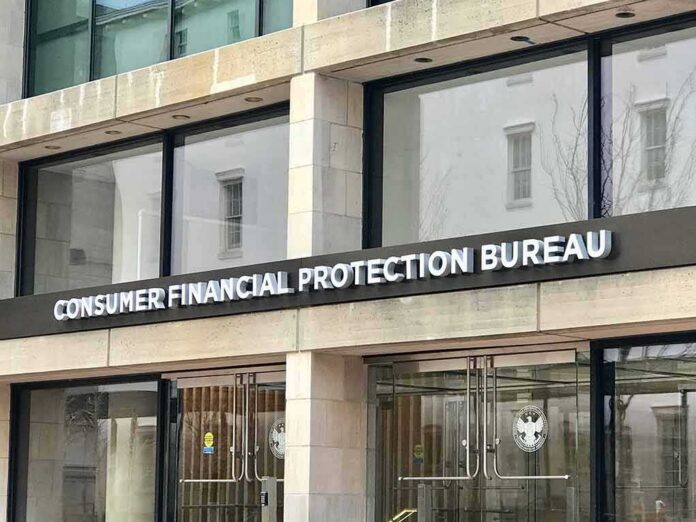
A federal bank regulator just cleared a path for World Liberty Financial’s stablecoin to sit inside a federally chartered trust bank, tightening crypto’s grip on the banking system while raising fresh conflict-of-interest alarms.
Story Snapshot
- The Office of the Comptroller of the Currency granted preliminary conditional approval for a national trust bank tied to World Liberty Financial.
- The approval covers a trust bank, not a deposit-taking institution, and remains conditional pending further steps.
- Democratic lawmakers earlier urged a Treasury review over potential conflicts and national-security risks linked to the venture.
- The decision fits a wider move to supervise stablecoins inside bank-like structures under stricter rules.
What The OCC Approved And What It Did Not
The Office of the Comptroller of the Currency (OCC) issued a corporate decision granting preliminary conditional approval for World Liberty Trust Company to organize as a national trust bank. The letter states the proposal met certain regulatory and policy requirements. This step allows the firm to keep building toward a federally supervised structure for its planned stablecoin and related services. It is not final approval, and it does not create a deposit-taking bank charter at this stage.
The OCC decision frames the entity as a trust company with powers limited to trust activities and related operations. That narrower scope differs from a full-service insured bank. It means no retail deposits and no standard checking accounts. It does open the door to issue and manage a payment stablecoin under bank-like oversight if the final approval conditions are met. That reflects the OCC’s view that some crypto activities can occur in trust structures under tight controls.
Why A Trust Charter Matters For Stablecoins
Stablecoin issuers face pressure to prove reserves, risk controls, and clear rules. A national trust charter places those activities under federal supervision, routine exams, and board-level risk duties. For users, that can mean better safeguards for reserves and clearer recourse if things go wrong. For markets, it may cut uncertainty about how a dollar-pegged token is run. The OCC has previously said banks may engage in certain crypto and stablecoin activities, subject to safe-and-sound limits.
For supporters, the charter path could move money-like tokens out of the shadows and into a rule-bound structure. For skeptics, it can look like a shortcut into the U.S. banking system without full bank duties. The OCC’s conditional stance tries to split that gap. It lets firms prove they can meet controls before getting full authority. It also keeps the regulator in the driver’s seat if an applicant misses risk, compliance, or governance marks on the way to launch.
Conflict Concerns And Political Heat
Earlier this year, Representative Gregory Meeks and dozens of House Democrats asked Treasury Secretary Scott Bessent to examine possible conflicts of interest and national-security issues tied to World Liberty Financial. Their letter flagged the company’s ownership links and foreign investment questions. The OCC decision notes its own review scope and conditions, while the broader conflict claims sit with other agencies to assess. The political scrutiny underscores trust gaps around government and industry ties.
Critics argue that giving a charter to a company linked to President Trump’s family deepens fears that elites can bend rules. Backers counter that a charter adds accountability and puts crypto products under firm oversight. Both sides share a core worry: will the rules protect regular people, not just the well-connected? The OCC’s conditional approval signals that the regulator knows the stakes and expects strict controls before any stablecoin activity goes live.
What Changes For Consumers, Banks, And Markets
Consumers could see more bank-style protections if stablecoin reserves sit in a supervised trust. They may get better disclosures and audits. They still face crypto risks, like price swings in related assets and tech failures. Banks may face new competition in payments if stablecoins gain ground under charters. Markets may gain clarity as more token issuers choose federal supervision rather than uneven state regimes. Clear rules can reduce shocks when platforms fail.
🚨WLFI News : Read the document, not the headline.
The OCC did not give World Liberty a bank licence.
CD #1385 grants preliminary conditional approval to organize a national trust company. The OCC's own text says the bank is "explicitly prohibited from becoming a 'bank'" under…— Owl 🦉💯 (@owlchart_com) August 17, 2026
None of this is final. The approval is conditional. The trust must still meet remaining requirements before it can begin operations. That includes building systems, hiring qualified leaders, and passing exam hurdles. If the firm falls short, the OCC can delay or deny a final green light. If it succeeds, a major stablecoin could operate under a federal trust charter, further blurring lines between traditional banking and digital tokens.
Bottom Line For A Distrustful Public
Many Americans on the right and left believe the system favors insiders. This decision will test whether federal rules can force a politically connected crypto company to play by the same tough standards as others. The OCC is trying to bring stablecoins into a supervised lane without granting a blank check. Watch what happens at final approval, what safeguards are disclosed, and how enforcement works when rules are broken. Trust will follow proof, not promises.
Sources:
bloomberg.com, news.bitcoin.com, coinmarketcap.com
© boldfrontnews.com 2026. All rights reserved.