

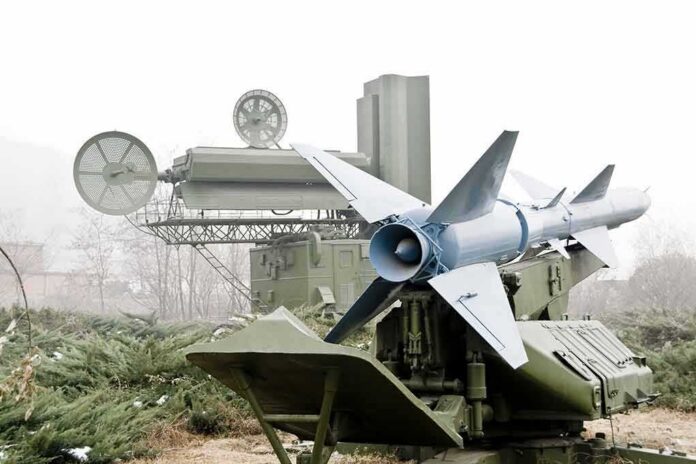
Russia’s S-400 promises 400-kilometer reach against stealth jets, but independent data shows its real kill window can shrink to under 20 kilometers against low-flying fighters.
Story Highlights
- Russia advertises S-400 as a stealth killer with long-range radar and missiles.
- Low-frequency radars may spot stealth jets but often lack targeting precision.
- Swedish research says effective range can drop below 20 kilometers at low altitude.
- No verified S-400 combat test against F-22 or F-35 exists to date.
What Russia Says the S-400 Can Do
Russian sources and many write-ups describe the S-400 air defense system as a layered shield designed to find and hit modern jets, including the F-35. They list a long-range search radar, a dedicated engagement radar, and missiles said to reach up to 400 kilometers. They also point to networked lower-frequency sensors that can notice stealth shapes at distance. These claims present a strong area-denial picture, on paper, against non-stealth and stealth aircraft alike.
The system’s marketing matters because it shapes how countries plan air campaigns and how taxpayers judge huge budgets. When governments sell range numbers without limits or context, they feed a story that any intruder will be shot down from far away. Many citizens across the spectrum see this as another example of officials using big claims to win funding while keeping proof locked behind secrecy. That fuels distrust in institutions that already feel unaccountable.
What Independent Analyses Say About Stealth Versus S-400
Independent analysts separate two steps: rough detection and weapons-grade tracking. Experts cited by major outlets say low-frequency radars can notice a stealth jet’s presence but often cannot give the precise track a missile needs. That higher-quality lock usually comes from higher-frequency radars that stealth shaping resists. This means detection does not equal a shot. It also means tactics and geometry often decide who sees whom first and at what range.
Public data from Sweden’s defense research agency undercuts the headline 400-kilometer figure in real fights. It reports that radar horizon, terrain, and target altitude can slash practical range. Against a low-flying fighter, the effective window can fall below 20 kilometers in some terrain. That gap between brochure range and real range is not rare in air defense. It reflects physics, earth curvature, clutter, and the time needed to build a solid track.
Where the Evidence Is Thin or Missing
No publicly verified case shows an S-400 detecting, tracking, and engaging an F-22 or F-35 through the full kill chain. Commentaries stress that a real engagement needs detection, stable tracking, classification, target handoff, and guidance that brings a missile close enough to work. Without such a case, the strongest claims on either side remain unproven in combat. That leaves the public sorting through partial data and marketing language.
Analysts also warn about electronic attack, decoys, and saturation strikes. These tools can blind or confuse defenses and are standard in modern air wars. Stealth aircraft add to that pressure by shrinking the range at which defenders can get a firing solution. When both sides adapt fast, single “wonder systems” rarely hold an edge for long. Instead, teams, training, and honest testing decide outcomes. That is the sober lesson from decades of air combat history.
Why This Matters Beyond the Tech
Americans on the left and right see a pattern: big promises, thin proof, and little accountability. Leaders cite classified wins to justify spending but seldom share hard, testable results. In a time of high costs and rising threats, that is not good enough. Clearer test data, including limits, would help Congress and citizens judge what they are buying, reduce hype, and force smarter plans that blend stealth, jamming, drones, and suppression tactics.
Bottom Line for U.S. Power and Policy
Stealth jets likely cut the S-400’s lethal reach, especially at low altitude, but do not make them invincible. The S-400 likely threatens non-stealth aircraft at long ranges but must solve tracking and guidance to hit stealth jets. The truth sits in the kill chain details, not in a single range number. Until verified combat or transparent tests emerge, planners should assume contested airspace and build layered packages that do not bet on any one silver bullet.
Sources:
wikiwand.com, foi.se, strasam.org, popularmechanics.com
© boldfrontnews.com 2026. All rights reserved.