
Central California’s largest mall just put a price on the closest parking spots, and tempers flared fast.
Story Snapshot
- Valley Plaza Mall added about 240 paid “preferred” spots; more than 5,600 others remain free.
- Fees run by the hour with a daily cap, pitched as a convenience for shoppers who want to park up front.
- Shoppers voiced fairness and safety concerns, saying it feels like a cash grab and not a service.
- The move mirrors a national trend where premium parking brings backlash and sometimes reversals.
What The Mall Changed And Where It Applies
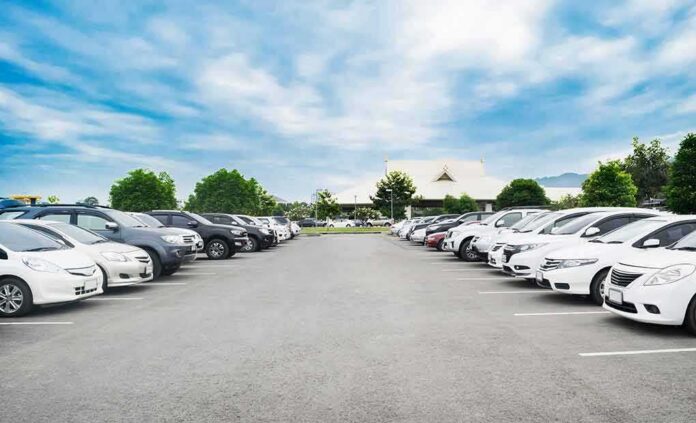
Valley Plaza Mall in Bakersfield launched a “Preferred Parking” program near its front entrances on August 1. The plan designates roughly 240 premium spaces for paid parking. Local reporting says the property has more than 5,632 total spaces, leaving most of the lot free for all shoppers. News clips and signage describe hourly fees with a daily cap for the preferred section, positioning the charge as a targeted option rather than a lot-wide rule.
Mall representatives framed the change as a convenience for people who want a guaranteed up-front spot. Coverage shows instructions to pay by scanning a code or texting a number, with rates starting a little over two dollars for the first hour and topping out at ten dollars for the day. Management’s message mirrors a common retail pitch: pay a small fee to save time and park close, while everyone else still parks in free areas farther from the doors.
How Shoppers Responded On The Ground
Local interviews captured pushback right away. Several shoppers said the fee feels unfair because they already spend money at the mall. One person compared it to an extra tax just to get through the door. Another said it is not a true convenience if the choice is to pay or park much farther away. Some mocked the change as big-city nickel-and-diming that does not fit Bakersfield’s norms.
Workers also raised safety worries in the same reports. They cited car break-ins in the lot and questioned whether charging for prime spaces addresses basic security. The criticism tied into a broader concern that public-facing services are getting monetized while core issues, like safety and customer care, lag behind. These reactions did not dispute the facts of the program but challenged its value and priorities for local families.
Why This Fits A National Pattern
Retail analysts and reporters say more malls are testing paid premium parking to add revenue and offer a convenience tier. The approach often splits opinion. Some customers value time savings and will pay. Others see fees as creeping charges on what used to be part of the shopping trip. The pattern has produced boycotts, empty premium stalls, and even policy reversals when backlash hit sales and community trust.
For many Americans on the left and right, this fight taps a shared worry: everyday life keeps getting sliced into add-on charges while basic service slips. People expect safe lots, clear signs, and simple trips. When a mall charges for what felt free yesterday, families ask who benefits. If preferred zones sit half empty and stores see fewer visits, managers often rethink the math. That is why clear communication, fair design, and visible safety work are make-or-break factors.
What To Watch Next In Bakersfield
Shoppers will watch how enforcement works, how busy the premium section stays, and whether reported safety concerns get real fixes. Mall leaders will monitor sales, foot traffic, and whether stores near entrances gain or lose customers. If the fee proves useful without hurting visits, it may stick. If not, past cases show operators sometimes scale back or reverse. For now, most spaces remain free, and the paid section is a choice, not a mandate.
Sources:
nypost.com, kget.com, youtube.com, bakersfieldnow.com
© boldfrontnews.com 2026. All rights reserved.