

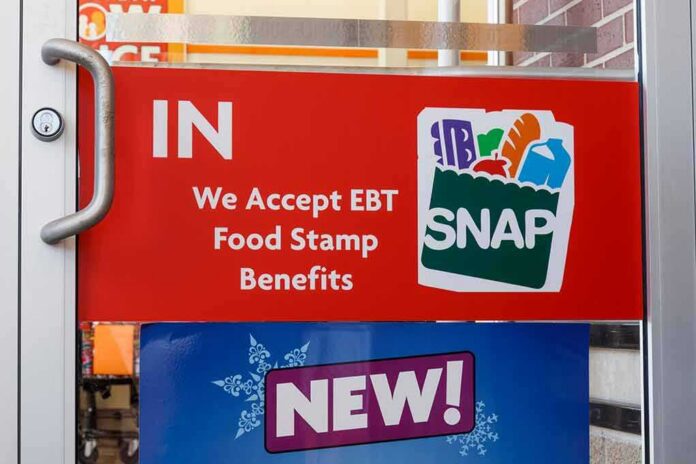
SNAP rolls are shrinking fast after new federal work rules expanded to adults up to age 64, and both sides say that trend proves their case about whether Washington helps or harms struggling families.
Story Snapshot
- Federal guidance shows broader work rules and narrowed exemptions now govern who can keep SNAP.
- Adults ages 18–64 face a three-month time limit unless they work or join eligible programs.
- Analysts and advocates say many who left SNAP include veterans, homeless people, and older adults.
- Officials have not released a clear breakdown of who left and why, leaving big questions.
What changed in federal SNAP rules
United States Department of Agriculture guidance for the One Big Beautiful Bill Act explains that more adults now face a time-limited rule tied to work or program hours. Covered adults must work at least 20 hours per week, or 80 hours a month, to receive ongoing help. Those who do not meet the standard can receive only three months of benefits in a 36‑month period. The policy widened the age group subject to the time limit from 18 through 54 to 18 through 64, unless another exemption applies.
Federal documents also state that several past exceptions were removed or narrowed. Guidance identifies changes for groups that previously had special exemptions, including people experiencing homelessness, veterans, and young adults who aged out of foster care. The guidance also clarifies that some caregivers now face tighter rules, with child‑care exceptions focused on younger children. These shifts create a direct path for caseload declines without proving improved household income or jobs for those who left the program.
How states are implementing the rules
Maine’s program materials describe separate but related work duties. The state says many adults must register for work, reply to job‑related requests, and avoid quitting work or cutting hours without good reason. People who already work 30 hours a week or earn the same amount are generally exempt from state work rules. Maine’s administrative rule adds that some applicants must keep an active Maine JobLink account, which introduces steps that can trip up otherwise eligible people during recertification or changes.
Maine’s rule also outlines workfare options and caps on hours, which can satisfy requirements but still demand steady compliance. These steps can shrink participation for several reasons. Some people may increase work and no longer qualify. Others may miss notices, fail to verify a JobLink account, or struggle to document hours in time. The research here does not report how many case closures fall into each bucket, so we cannot say how much is due to noncompliance versus improved earnings.
What supporters and critics each point to
Supporters of the law argue that stricter rules focus help on people with the greatest need and reduce improper participation. The federal guidance clearly shows the legal basis for the expanded time limit and the 20‑hour standard. That gives an administrative explanation for a national drop in SNAP enrollment. However, the materials do not include proof that those leaving had higher income, found stable jobs, or left due to fraud detection. They are rule maps, not outcome reports.
Democratic lawmakers and several researchers frame the same enrollment drop as a loss of food aid during a period of high grocery costs. A report by National Public Radio said the Congressional Budget Office estimated the work‑rule changes would reduce average monthly participation by about 2.4 million people over 2025 through 2034. It also said new rules now reach veterans, homeless people, young adults leaving foster care, parents of children ages 14–17, and adults ages 55–64. That mix raises broad public concern.
Evidence gaps that fuel public frustration
The sharpest dispute centers on what the numbers mean. An Associated Press report said enrollment fell from 42.2 million in May 2025 to 36.6 million in May 2026. That change has become a talking point for both sides. Yet the federal and state rule documents do not provide the monthly series, the detailed exit reasons, or post‑exit outcomes that would settle the debate. Without that, people can fairly ask whether Washington is enforcing the law or just cutting corners.
Research summaries add more context. Reviews by nonpartisan groups find that work rules often reduce SNAP participation but do not consistently raise employment. That pattern suggests administrative hurdles and time limits explain a large share of the exits, not sudden income gains. Maine’s own materials show added steps like JobLink accounts and prompt responses to notices, which are easy to miss for anyone working unstable hours or caring for family members while juggling bills.
What to watch next
Several data points would move this from argument to answers. First, detailed monthly counts of SNAP cases before and after the rule change, broken out by age, exemption status, and reason for closure. Second, a match of exited cases to wage records and unemployment data to see who found steady work. Third, state‑level logs on missed notices, interview delays, and account problems, to measure preventable loss of aid. These steps would tell taxpayers and families what actually happened.
Sources:
thegatewaypundit.com, fna.usda.gov, usda.gov, maine.gov
© boldfrontnews.com 2026. All rights reserved.