

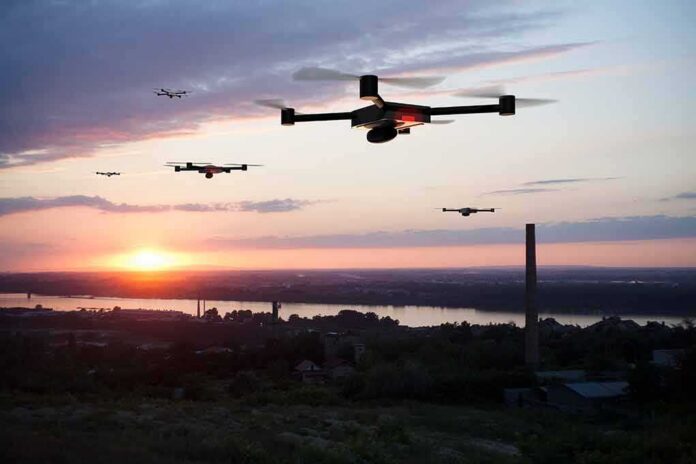
U.S. Central Command announced a first-of-its-kind multinational attack drone task force to boost deterrence across the Middle East.
Story Snapshot
- CENTCOM is establishing Task Force Falcon Strike, a multinational, multi-domain attack drone unit.
- The force will use one-way attack drones above, on, and below the water to counter regional threats.
- The rollout reflects lessons from Ukraine and ongoing conflict with Iran-backed networks, stressing cheaper, scalable systems.
- Details on member nations and size remain limited as the effort moves from announcement to execution.
What CENTCOM Announced And Why It Matters
United States Central Command (CENTCOM) said on August 13 that it is establishing Task Force Falcon Strike, the military’s first multinational, multi-domain attack drone task force. The command framed the move as a way to integrate partner capabilities and improve deterrence across the Middle East. The unit will employ “one-way attack drones” in air and maritime environments, including systems that operate above, on, and below the sea. The announcement places drones at the center of coalition operations in a region filled with fast-moving threats.
The “first-ever” claim signals a shift from small, single-service drone cells to a standing, combined construct. CENTCOM’s push tracks with wider defense trends that favor low-cost, networked systems over only using high-end jets and ships. Planners have watched how drones changed battles in Ukraine and the Middle East. They aim to blend U.S. and partner platforms so the group can hunt, strike, and adjust faster than state or proxy forces that try to overwhelm defenses with massed drones and cheap missiles.
How The Task Force Will Likely Operate
CENTCOM described a multi-domain approach that links sensors and shooters across air and sea, including surface and subsurface drones. One-way attack drones can swarm a target, hit from odd angles, and impose costs on larger ships or air defenses. Partner nations can add local knowledge, basing, and platforms, while the United States provides command-and-control and strike planning. The promise is scale and persistence at lower cost. The risk is fog and friction when many players share data and reload fast in combat conditions.
CENTCOM’s release stresses the unit as an “effort to establish,” which often means structure and staffing will roll out in phases. Early announcements like this tend to highlight goals while keeping force size, member lists, and rules for use classified or unsettled. That gap is normal in defense reporting and usually fills in later through joint drills, budget lines, and named partner statements. For now, the key facts are the mission focus, the multi-domain design, and the intent to pool allied attack drones under one task force.
Regional Drivers: Iran Conflict And Lessons From Ukraine
Commanders have faced waves of drone and missile attacks from Iran and allied militias, which test bases, ships, and trade routes. They want answers that are fast, flexible, and cheaper to sustain than firing costly interceptors day after day. A combined attack drone unit aims to flip the script by striking launch sites, boats, and depots before salvos launch, or by punishing them soon after. The design borrows from recent wars, where drones and counter-drones shape daily tactics and long-term supply chains.
CENTCOM announced that it is working to create its first-ever multinational attack drone force, designated Task Force Falcon Strike. This comes just as various U.S. media outlets allege that 25% of the MQ-9 Reaper fleet has been shot down by Iranian forces.😄 pic.twitter.com/OkKZz00aBE
— Abraracursix abdala (@Abraracurs64713) August 14, 2026
For many Americans, this story hits two nerves at once. People on the right and left are tired of endless spending and far-off wars that do not seem to end. They also want the government to be smarter, faster, and less wasteful. A task force built on cheaper, mass-produced systems speaks to that concern. It aims to lower costs while keeping troops safer. The true test will be results: fewer attacks on U.S. forces, safer shipping lanes, and partners who carry real weight in the fight.
What We Still Do Not Know
CENTCOM has not named partner countries, unit size, basing plans, or a full command chart. Such details often emerge once training starts or when allies announce their role at home. Until then, watch for joint exercises, procurement notices, and changes in regional posture on the CENTCOM site and allied releases. The bottom line is clear: the United States is formalizing a coalition attack drone arm to respond faster and at lower cost across air and sea in the Middle East.
Sources:
pjmedia.com, amp.rbc.ru, waradana.com, i24news.tv
© boldfrontnews.com 2026. All rights reserved.