
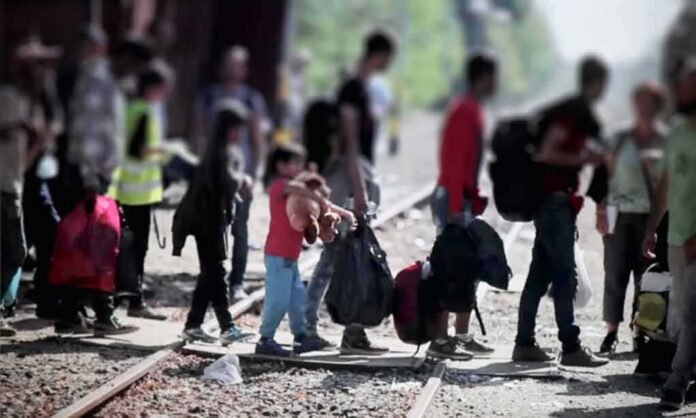
Hundreds of protesters clashed with police in Portsmouth after about 140 migrants were rescued at sea and brought ashore for routine processing, exposing how Britain’s migration system keeps fueling street unrest.
Story Snapshot
- About 140 people in a single dinghy were rescued near Portsmouth and taken ashore for processing.
- Large protests and a police stand-off followed near Eastney, with roads blocked and tensions high.
- Officials described the response as a rescue and standard processing, not a criminal arrest.
- Small boats now drive a large share of asylum claims, keeping pressure on housing, policing, and politics.
Rescue And Processing Trigger Local Unrest
Emergency services responded on Sunday after a small boat headed toward the Hampshire coast. The Coastguard sent lifeboats, a helicopter, a plane, and rescue teams. Border Force and police also went to the scene. About 140 people were brought safely to shore near Eastney in Portsmouth. Reports said they would be processed as is routine for small boat arrivals. The landing drew a rapid crowd that later turned into a tense stand-off with police near the ferry area.
Local political figures amplified the arrival online. A Reform UK leader in Hampshire posted that “over 100 migrant men” had landed. A party figure reshared the post and used the word “invasion.” That rhetoric clashed with official descriptions of a rescue-and-transfer operation. The sharp split in language reflects a national divide over whether such scenes show humane duty or failing borders. It also fuels faster call-outs for protests when landings occur.
How This Fits The Bigger UK Pattern
Since 2018, most small-boat arrivals have claimed asylum. Government statistics show these arrivals now account for about two-fifths of all asylum claims in the year ending December 2025. That trend means more visible operations at beaches and ports, with cameras rolling. The public sees the rescue and buses, but case decisions come months later. This delay keeps debates hot while facts about individual claims remain pending for a long time.
Independent analysis finds many small-boat applicants later win protection, but not all. Grants and refusals vary by country and case. That mix helps each side pick evidence for its view. Some point to safety and legal rights. Others point to costs, housing strain, and crime fears. Both react to the same docks and hotels, but measure success very differently. That is why routine processing can look like either order or collapse to different viewers.
Police Response And Risk Of More Unrest
Police managed a stand-off near Eastney after the landing. Crowds tried to block routes used to move people to a processing center. Officers formed lines and moved vehicles. This was the second major anti-migrant protest reported over a short period, heightening concern that more unrest could follow. The cycle is now familiar: a landing, online posts, fast turnouts, and tense scenes between protesters, counter-protesters, and police.
🚨"STOP THE BOATS": Hundreds of protesters flooded the streets of Portsmouth after roughly 140 migrants arrived on the Hampshire coast following one of the largest small-boat crossings to the UK this year.
More than 500 people reportedly joined the demonstration, with some… pic.twitter.com/TsezTgjCJW
— StandupSpeakOut (@StndupSpekup) September 7, 2026
Officials say they will keep landing sites safe and process people under the law. Protesters say the system is broken and unfair to locals who face high rents, long waits for services, and thin policing. Both messages speak to wider frustration with state capacity. Many believe leaders have allowed a crisis to become routine. That gap between promises and lived reality is what draws people to the streets when a boat appears.
What The Data Says, And What It Does Not
Home Office releases and related datasets track arrivals, claims, and outcomes. They show a clear rise in small-boat reliance within the asylum system. They also show that thousands gain protection while many are refused. But these files do not answer local questions about housing, hotel use, or policing costs. That missing link between national spreadsheets and neighborhood impact keeps anger hot after each landing.
The Portsmouth boat reportedly launched from Baie de Seine in France, a route described as unusual for that stretch of the coast. That detail shows smugglers adapt when patrols shift. It also hints that spikes can hit towns not used to them. When systems bend to handle the surge, people notice coaches, cordons, and temporary sites. Those scenes can harden views even before any asylum decisions are made.
Why This Moment Matters
Britain faces two linked tests: stop deadly crossings and honor refugee law. Portsmouth shows how meeting both goals strains trust when the response looks improvised. Rescue is right, and chaos is dangerous. But the state must also move fast on fair decisions, housing plans, and removals when claims fail. Without that, every landing becomes a flashpoint, and every protest becomes a referendum on whether government still works.
Sources:
independent.co.uk, mirror.co.uk, dailyecho.co.uk, migrantdata.uk, assets.publishing.service.gov.uk, questions-statements.parliament.uk, gov.uk, bbc.com
© boldfrontnews.com 2026. All rights reserved.