
In a rare primetime address from the White House, President Trump claimed the United States is close to ending the Iran war while unveiling sweeping moves on “free and fair elections” that deepen questions about power, truth, and who really controls the system.
Story Snapshot
- President Trump used a nationally televised address to link “free and fair elections” with sweeping claims about victory over Iran.
- He said U.S. forces have “knocked out” most of Iran’s military and are enforcing a blockade of the Strait of Hormuz.
- He asserted Iran nearly had nuclear weapons and claimed 52,000 protesters were killed, without presenting hard evidence.
- Long‑running fact checks and intelligence reports show a pattern of Trump making major national security claims that lack independent proof or contradict expert findings.
Trump’s Primetime Address: Elections and War in One Speech
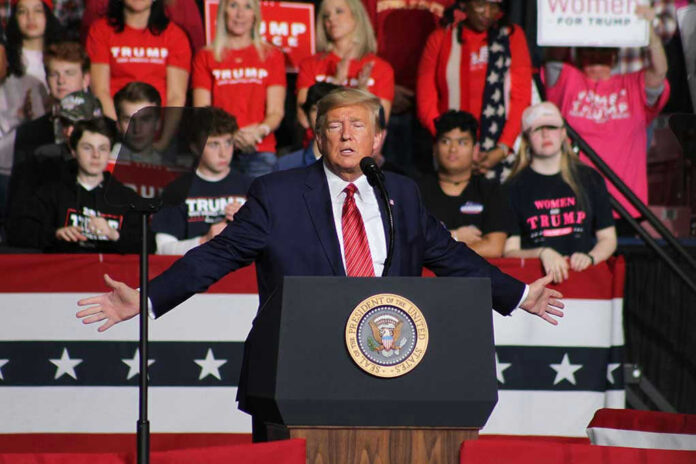
On Thursday night at 9 p.m. Eastern, President Trump addressed the nation from the White House, promising “really big news” and a focus on “free and fair elections.” White House press secretary Karoline Leavitt said ahead of time that he would speak about protecting the integrity of elections and urged every American to watch. Commentators expected him to revive his claims that the 2020 election was stolen and to highlight newly declassified intelligence about voting and foreign activity.
During the address, Trump did tie his election message to national security, saying that “without free and fair elections, you don’t have a country.” He framed election integrity as a non‑partisan issue, arguing both parties should want confidence in voting systems. At the same time, he continued to insist there was major fraud in 2020, even though federal investigations and the Cybersecurity and Infrastructure Security Agency previously found no evidence of foreign powers changing votes or disrupting counting.
Trump’s Iran War Claims: “Decimated” Military and Hormuz Blockade
The most dramatic part of the speech came when Trump shifted from elections to the war with Iran. He told viewers the United States had “knocked out” most of Iran’s military capabilities in just four months, saying Iran’s navy was “absolutely destroyed,” its air force badly damaged, and its missile and drone industry “annihilated.” He described these operations as part of “Operation Epic Fury” and said America was “systematically dismantling the regime’s ability to threaten America or project power.”
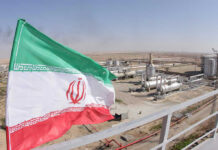
Trump also announced that the United States is enforcing a blockade on the Strait of Hormuz aimed specifically at Iran. He said America does not “need” the strait and claimed the U.S. has “beaten and completely decimated Iran,” both militarily and economically. This language echoed his earlier social media posts portraying Iran as already neutralized, even as U.S. officials and allies remained concerned about the risks to global oil supplies and shipping.
Nuclear Deadlines and Protest Deaths: Huge Numbers, Few Details
Trump raised the stakes further by asserting that, without U.S. military action, Iran would have obtained nuclear weapons within a month. He presented this as a near‑miss for the world but did not cite any specific intelligence reports, timelines, or technical analysis to support the claim. Previous reporting on Iran’s nuclear program noted serious concerns, but U.S. intelligence assessments have typically described Iran’s path to a bomb in terms of months or years, not weeks.
President Trump says documents reviewed by White House officials show that "starting in the 2020 election cycle, the People's Republic of China carried out what is believed to be the largest compromise of election data in history."
220 million U.S. voter files containing… pic.twitter.com/RUOpirgZrY
— CBS News (@CBSNews) July 17, 2026
The president also claimed Iran has killed 52,000 protesters, a number far higher than publicly documented figures in past unrest. In the White House transcript of the speech, there were no references to United Nations reports, human rights investigations, or other independent sources to back up that death toll. That gap matters for Americans who worry both about brutal regimes abroad and about how unverified numbers can be used at home to justify more war, more spending, and more power for the same small group of decision‑makers.
Pattern of Unverified Claims and Growing Public Distrust
The White House transcript notes that Trump’s Iran claims in the address were not accompanied by independent verification or detailed evidence. This fits a broader trend. Over his first and second terms, fact‑checkers and reporters have documented many cases where Trump made sweeping statements about military success or foreign threats that did not match available data. These include past claims about “obliterating” Iran’s nuclear program and defeating the Islamic State in weeks, which later evidence showed were overstated.
Major outlets, including CNN and PBS, have repeatedly fact‑checked Trump’s Iran war remarks and found numerous unproven or false statements. Intelligence reports have also undercut some of his earlier claims about foreign election interference and nuclear concessions from Iran. For many Americans on both the right and the left, this pattern reinforces a deeper fear: that the most critical stories about war, elections, and national survival are being told without full transparency, while the people in charge demand trust but rarely show their work.
Shared Frustrations: Elections, War, and the “Deep State” Debate
Trump’s decision to weld together election integrity and Iran war claims in one address landed in a country already on edge. Conservatives who support his America First agenda are tired of what they see as globalist wars, high costs, and a political class that ignores their votes. Liberals who oppose him are angry about crackdowns on immigrants, cuts to social programs, and what they view as discrimination. Yet more and more, both sides agree on one thing: Washington’s power centers are not being honest or accountable.
Trump used the speech to attack “fake news” coverage and hint that parts of the government and media are hiding the truth about elections and Iran. At the same time, independent watchdogs, human rights groups, and intelligence agencies have either not confirmed his latest claims or directly challenged earlier ones. That tug‑of‑war leaves ordinary Americans stuck in the middle, trying to make sense of huge decisions about war and voting that are made behind closed doors, with billions flowing to defense contractors and political campaigns while the basic promise of the American Dream feels further out of reach.
Sources:
youtube.com, nytimes.com, cnn.com, pbs.org, time.com, hoyer.house.gov, edition.cnn.com, en.wikipedia.org, reed.senate.gov, facebook.com
© boldfrontnews.com 2026. All rights reserved.