

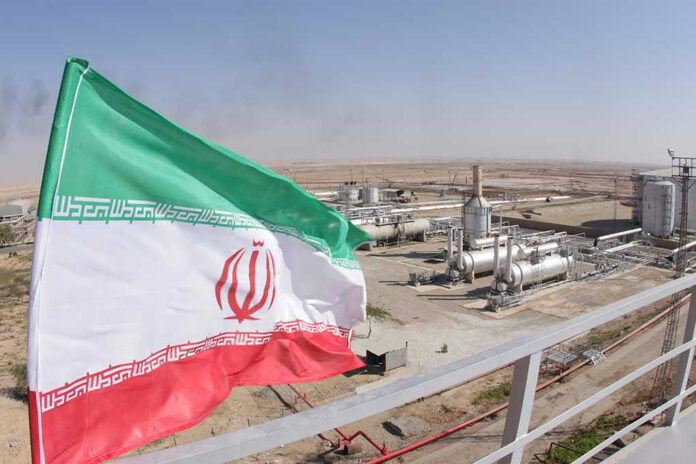
Iran’s Islamic Revolutionary Guard Corps media just said it is “time” to build nuclear bombs—pushing a red line that could upend global security and prices at home.
Story Snapshot
- IRGC-linked outlet urged nuclear bomb development to protect “peace and calm.” [4]
- Eighty-five lawmakers pressed for long-range missiles, signaling harder deterrence plans. [2]
- International watchdog says it sees no organized bomb program, fueling a facts gap. [12]
- Strait of Hormuz tensions show how fast a crisis can hit energy and trade. [1]
IRGC Media Calls for Nukes, but No Formal Policy Shift
Fars News, which is tied to Iran’s Islamic Revolutionary Guard Corps, ran a June 28 report saying it is time for Iran to develop nuclear bombs to protect “peace and calm.” The New York Post highlighted the call and linked it to recent tensions and failed talks. The statement did not come as a formal government order or law. That leaves a split between hardline rhetoric and official policy on paper. The gap raises risk of miscalculation. [4]
The Institute for the Study of War reported that eighty-five Iranian parliament members wrote Supreme Leader Mojtaba Khamenei on May 31 urging intercontinental missile development. The letter points to broader support for stronger deterrence inside Iran’s system. It stops short of openly backing nuclear warheads. Still, long-range missiles and bomb talk together send a sharp signal of intent. Outside powers will read this as preparation for faster breakout options. [2]
What Inspectors See Versus What Iran Signals
The International Atomic Energy Agency director said in June that inspectors do not see a “systematic, organized, institutionalized” nuclear weapons program in Iran. That view clashes with claims online that Iran could build multiple bombs within weeks. Inspectors also face access limits at key sites hit in strikes. The result is a fog of partial facts. Each side highlights what helps its case, while the public gets uncertainty instead of clarity. [12]
Iran’s leaders have long said nuclear arms have no place in their doctrine. That line supported deals that traded limits for sanctions relief. Yet the current hardline messaging uses deterrence logic, pointing to past powers that gained leverage after going nuclear. When words change but laws do not, markets and militaries brace for worst-case moves. Without verified data, risk assessments lean conservative, and that can drive energy and shipping premiums higher. [8]
Why This Matters for Americans: Energy, Shipping, and Escalation Risks
The Strait of Hormuz moves a major share of the world’s oil and gas. Iran has shown it can threaten that route during crises. Even rumors of new nuclear steps can pull warships into the Gulf, raise insurance for tankers, and lift fuel prices for families and truckers. A single misread signal between navies or militias can spark clashes. In that kind of chain, the pump price and the grocery bill are the first places Americans feel it. [1]
Iran must develop nuclear bomb to protect ‘peace and calm,’ IRGC media says — despite pledge to Trump #Nuclearweapon #Iran #DonaldTrump #Nuclearenergyhttps://t.co/wC2WJuoGBX
— Rueben Urias (@RuebenUrias) June 29, 2026
Washington has said repeatedly that Iran cannot get a nuclear weapon. Israel has claimed strikes reduced Iran’s nuclear and missile capacity. Tehran rejects those claims and highlights resilience. With facts in dispute, pressure grows for inspections, satellite proof, and open evidence. Until then, both hawks and doves will see what they fear: either a cover for a bomb sprint or a march toward another open-ended conflict that costs lives and money. [6]
Signals to Watch Next: Evidence, Access, and Legal Steps
Watch for three hard proof points. First, any formal decree inside Iran that revokes recent pledges or openly authorizes weapon work. Second, an emergency inspection plan that verifies stockpiles and equipment status. Third, a public vote in parliament that links missiles to warheads in law. If those steps happen, risk jumps. If Tehran grants inspectors broad access and reaffirms limits with teeth, risk eases. So far, the record is mixed and thin. [2]
What Readers Across the Aisle Are Asking
Conservatives ask if global bodies and elites will stop a hostile regime before it can threaten our troops, allies, and economy. Liberals ask if leaders will choose facts and inspections over rush-to-war politics that leave working families paying the bill. Both worry that insiders on all sides profit while citizens face higher costs and danger. Demanding verified data, clear red lines, and real accountability is not partisan—it is common sense in a foggy fight. [1]
Sources:
[1] Web – IRGC media: Must develop nuke bomb to protect ‘peace and calm’…
[2] Web – 2026 Iran war – Wikipedia
[4] Web – 2026 Iran war | Deal, Explained, United States, Israel, Strait of …
[6] Web – Iran Update Special Report, June 13, 2026: Iranian statements …
[8] Web – Days after the US and Iran signed a 14-point memorandum of …
[12] YouTube – Iranian foreign minister says they “have every right” to “nuclear …
© boldfrontnews.com 2026. All rights reserved.