

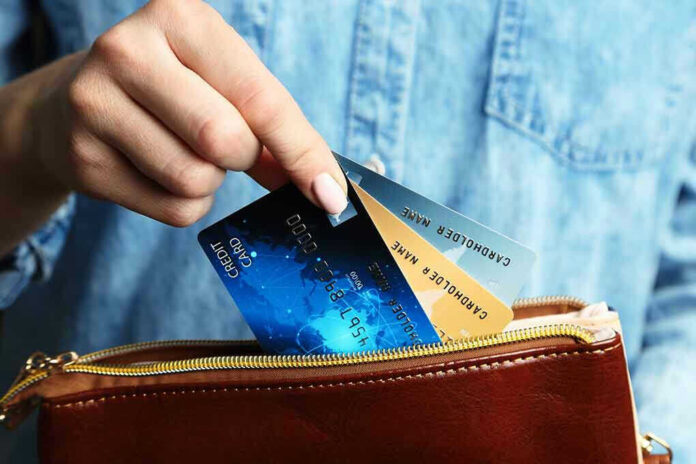
Credit cards are not just pieces of plastic; they are powerful financial tools that have reshaped economies, often misunderstood for their intricate mechanics and historical evolution.
Story Snapshot
- Credit cards revolutionized spending habits and consumer credit.
- Understanding the mechanics from authorization to billing is crucial.
- Their evolution reflects major technological and economic shifts.
- Today, credit cards influence both personal finance and global commerce.
The Mechanics Behind Credit Cards
Credit cards function as a conduit for borrowing funds up to a predetermined limit, enabling users to make purchases and choose to repay the balance either in full each month or incrementally over time with interest. The process begins with transaction authorization by the card issuer, followed by routing through card networks such as Visa or Mastercard, and ultimately settling with the merchant. Monthly statements provide a comprehensive record of activities while highlighting any interest accrued on unpaid balances.
The revenue model for credit card issuers is multifaceted, including interest from revolving balances, annual fees, late fees, and interchange fees charged to merchants. Card networks further monetize through transaction fees and licensing agreements. While the system offers convenience and fraud protection, it also poses risks, such as high-interest debt and the potential for financial distress if mismanaged.
Historical Evolution and Key Innovations
The journey of credit cards began with rudimentary forms of credit in the late 19th century, evolving significantly with the introduction of the Diners Club card in 1950. This marked the inception of modern credit cards, followed by BankAmericard’s revolutionary concept of revolving credit in 1958. The formation of the Interbank Card Association, now Mastercard, in 1966, spearheaded global acceptance and usage.
Technological advancements played a crucial role in credit card evolution. The introduction of magnetic stripe technology in 1969 and the development of EMV chip technology in 1994 significantly enhanced security and processing speeds. The first credit card rewards program launched in 1984, adding an incentive layer to consumer spending. More recently, mobile wallets have emerged, transforming payment methods and further integrating technology into financial transactions.
Stakeholders and Their Interplay
The credit card ecosystem is a complex network involving several key stakeholders. Consumers seek convenience, rewards, and short-term credit. Issuing banks provide the cards, extend credit, manage accounts, and collect various fees. Card networks, such as Visa and Mastercard, operate the payment infrastructure, set rules, and facilitate transactions. Merchants accept the cards, pay interchange fees, and benefit from increased sales, albeit with concerns over fee structures.
Payment processors handle the intricate transaction routing and settlement, while regulators, such as the CFPB and Federal Reserve, oversee industry practices to ensure consumer protection and financial stability. The power dynamics within this ecosystem heavily favor issuers and networks, who wield significant influence over terms and technology, while merchants often find themselves negotiating fees on a scale they can manage.
Contemporary Developments and Impact
In recent years, the credit card industry has witnessed substantial growth in contactless and mobile payments, driven by technological innovation and consumer demand for convenience. However, rising consumer debt and increasing interest rates have prompted regulatory scrutiny over lending practices and fee transparency. Major networks and issuers continue to announce new security features and digital wallet integrations to stay ahead of evolving consumer preferences.
The implications of credit cards are both short-term and long-term. In the short term, they provide consumers with enhanced convenience and spending power, albeit with the risk of higher debt levels. Long-term, credit cards are poised to continue driving consumer spending, supporting economic growth while raising questions about debt regulation and financial literacy. The payments industry faces potential disruption from digital wallets and alternative payment methods, challenging traditional banks to innovate and retain consumer loyalty.