
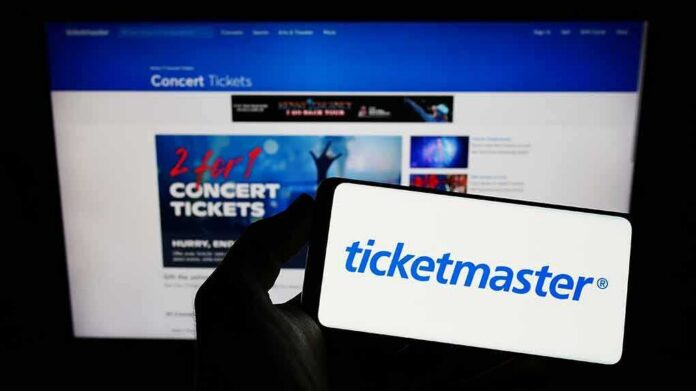
The Justice Department just handed Live Nation a sweetheart deal that keeps the monopoly intact while American families continue getting fleeced on concert tickets.
Story Snapshot
- Justice Department settled with Live Nation for $280 million—just four days of company revenue—leaving monopoly structure untouched
- Over two dozen states rejected the deal and will continue fighting, calling it a “terrible deal” and “failure of the justice system”
- Only 13 of thousands of venues get fee caps while consumers remain stuck with sky-high ticket prices nationwide
- Federal judge slammed settlement process as “entirely unacceptable,” highlighting lack of transparency in negotiations
Federal Settlement Falls Short of Accountability
The Justice Department announced a tentative settlement with Ticketmaster and Live Nation Entertainment on March 9, 2026, concluding federal involvement in a major antitrust case. The settlement requires a $280 million fund, divestment of 13 amphitheaters, and a 15 percent service fee cap at those specific venues. Live Nation also faces an eight-year consent decree extension allowing continued DOJ oversight. The company’s vertical monopoly over concert promotion, ticketing, and venue ownership remains fundamentally unchanged. This represents exactly the kind of weak enforcement that frustrates Americans tired of corporate giants escaping real consequences.
States Refuse to Accept Inadequate Terms
More than two dozen state attorneys general rejected the federal settlement and committed to continuing litigation against Live Nation. New York Attorney General Letitia James stated the deal “fails to address the monopoly at the center of this case.” North Carolina Attorney General Jeff Jackson called it “a terrible deal” that was hidden from states until the last minute. Washington State Attorney General Nick Brown confirmed the coalition remains “committed to holding the company accountable.” The state rebellion demonstrates how federal bureaucrats negotiated behind closed doors without consulting their state partners, undermining a unified approach to consumer protection.
Negligible Financial Penalty Exposes Toothless Enforcement
The $280 million settlement fund represents approximately four days of Live Nation’s 2025 revenue, according to National Independent Venue Association executive director Stephen Parker, who noted the company “could potentially make it back by this Friday.” This minimal financial impact exposes the settlement as symbolic rather than substantive. Only 13 amphitheaters in Milwaukee, Cincinnati, Syracuse, New York, and Austin will see the 15 percent fee cap, leaving thousands of venues nationwide unaffected. The deal includes no specific protections for fans, artists, or independent venues competing against Live Nation’s stranglehold on the industry. This mirrors the pattern of big government making noise about enforcement while delivering outcomes that barely scratch corporate giants.
Judge Criticizes Settlement Secrecy
Manhattan federal court Judge Arun Subramanian expressed strong disapproval of the settlement process, calling it “entirely unacceptable” that he was not informed until late Sunday despite the term sheet being signed the previous Thursday. The judge’s criticism highlights procedural failures that kept even the presiding judicial authority in the dark while federal negotiators cut deals. The antitrust trial will resume with states pressing their claims, as the judge told jurors the settlement would not halt proceedings. This lack of transparency represents exactly the kind of bureaucratic backroom dealing that erodes public trust in government institutions.
Monopoly Structure Remains Unchallenged
Live Nation’s integrated control over concert promotion, ticketing through Ticketmaster, and venue ownership continues despite the settlement. The company allegedly used threats, retaliation, and other tactics to suffocate competition by controlling virtually every aspect of the industry. CEO Michael Rapino claimed the company “never relied on exclusivity to drive our ticketing business,” attributing success to superior products and services. Independent venues and promoters remain at a structural disadvantage with limited competitive opportunities. The settlement’s 50 percent ticket distribution requirement at some venues provides modest access but fails to dismantle the core monopoly that drives up prices for American families trying to enjoy entertainment.
Concert ticket prices won’t decrease under this settlement because the fundamental problem—Live Nation’s monopolistic control—remains unaddressed. The weak federal response demonstrates why conservatives advocate for genuine free-market competition rather than government-negotiated settlements that protect corporate behemoths. Americans deserve better than symbolic enforcement that leaves monopolies intact while pretending to serve consumers. The states continuing this fight represent the last line of defense against a system that protects powerful interests over ordinary families.
Sources:
Justice Department and Live Nation reach settlement over illegal monopoly case, AP source says
United States of America et al. v. Live Nation Entertainment Inc. et al.
Live Nation Entertainment SEC Filing