

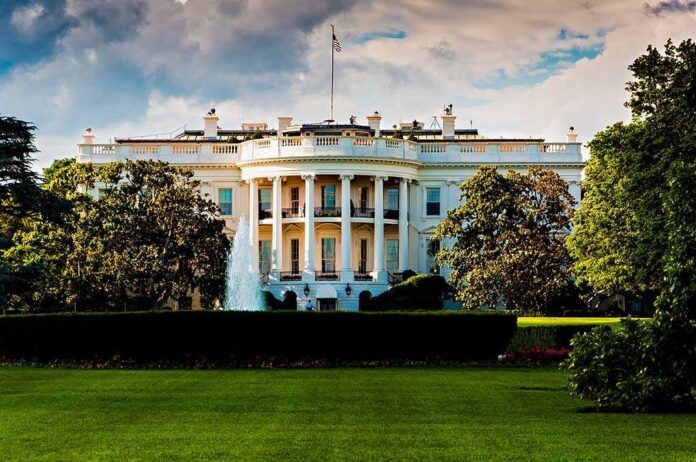
A fight over how big to build a new White House ballroom has turned into a test of power, priorities, and what kind of legacy President Trump wants to leave behind.
Story Snapshot
- President Trump removed architect James McCrery II after clashes over the scale and speed of a massive new White House ballroom project.
- The replacement team is driving plans for a much larger, faster build that could rival the historic Executive Residence in size and presence.
- The project leans heavily on private donors, raising serious questions about transparency, influence, and accountability.
- Demolition of the East Wing and limited traditional oversight worry preservationists and constitutional watchdogs.
Trump’s Vision for a Monumental Ballroom
President Donald Trump is pushing ahead with an ultra-large White House ballroom that some experts say could visually compete with the Executive Residence itself, signaling a desire for a grand, enduring symbol of his second-term agenda. The proposed venue, reportedly around 90,000 square feet and designed to host close to 1,000 guests, reflects Trump’s long-standing preference for showpiece interiors that showcase power, scale, and spectacle. Supporters see a patriotic stage for state events; critics fear an overreach that reshapes “the people’s house.”
From a conservative standpoint, the scale of this project raises important questions about priorities at a time when many Americans still carry the weight of inflation, federal overreach, and the debris of past globalist spending sprees. A privately funded, palace-sized ballroom on federal grounds can look like a double-edged sword: it spares taxpayers up front, yet risks deepening perceptions that access and influence are increasingly reserved for donors and elites. For readers wary of Beltway excess, this tension goes straight to the heart of representative government.
Why the First Architect Was Pushed Aside
Architect James McCrery II initially led the design, bringing a traditionalist, proportion-conscious approach shaped by work on churches and libraries, and he reportedly urged restraint as the ballroom’s size and cost ballooned. Over months of back-and-forth, McCrery warned that the expansion risked overwhelming the historic structure, even as construction timelines tightened and East Wing demolition preparations moved forward. When McCrery resisted the push toward a more massive footprint, he was removed from day-to-day leadership, recast as a “consultant,” and effectively sidelined.
This change struck many observers as a classic example of professional judgment colliding with raw political power, with the architect holding technical expertise but little leverage against a determined president. For constitutional conservatives, the episode raises a familiar concern: when experts say “slow down” or “scale back” on projects tied to national symbols, should one elected official be able to steamroll that caution almost unilaterally? The firing underscores the imbalance and fuels arguments for clearer legal guardrails on major physical changes to the White House complex.
Enter Shalom Baranes and a Bigger, Faster Plan
After McCrery’s demotion, the White House tapped Shalom Baranes Associates, a heavyweight Washington firm known for large federal buildings and post‑9/11 reconstruction work, to drive the ballroom forward. This shift brought in deeper institutional capacity and a team more comfortable operating under compressed schedules, complex security demands, and the realities of building in the federal core. The new leadership reportedly embraced a larger program and more aggressive timeline, aligning with Trump’s desire for a marquee project that could host major diplomatic, political, and ceremonial events.
For frustrated taxpayers who watched years of slow-walked infrastructure and bureaucratic red tape, a firm that can actually execute a big build may sound attractive. Yet there is a flip side: when speed and scale become the dominant goals, historic preservation and public scrutiny can get pushed to the margins. The risk is that the White House shifts further from a modest republican residence into something closer to a palatial compound, feeding critics who already claim Washington elites live by a different visual and moral standard than the families footing the broader bills of government.
Private Money, Public Power, and Oversight Fights
One of the most consequential features of the ballroom plan is its heavy reliance on private donors instead of the normal congressional appropriations process, allowing the administration to advance a $200–300 million project with less up-front taxpayer debate. This funding model taps into powerful networks of business figures and political allies who gain prestige and proximity in exchange for helping finance a signature piece of presidential infrastructure. While legal in many circumstances, this approach blurs the line between public asset and donor-backed venue in ways that make many constitutional conservatives uneasy.
Members of Congress and watchdog groups have responded by exploring “No Palaces Act”–style legislation that would require formal review by planning bodies like the National Capital Planning Commission and mandate congressional approval for large, privately funded projects on White House grounds. Such proposals aim to restore checks and balances, ensuring that any demolition or mega-addition goes through public, accountable channels rather than donor-driven shortcuts. For readers who cherish limited government, these efforts echo a core principle: even a friendly president should not unilaterally redefine the seat of the presidency with minimal oversight.
What This Means for Constitutional and Cultural Stewardship
Beyond the immediate drama over who designs what, the ballroom fight tests the practical limits of executive control over one of America’s most potent symbols. Demolishing the East Wing and inserting a huge event hall would permanently change how the White House feels and functions, potentially shifting its image from a relatively restrained executive mansion to an events-focused complex. Architectural historians and preservationists warn that once such a structure is in place, there is no easy path back, and future presidents will be tempted to treat the site as a flexible backdrop rather than a carefully stewarded national heirloom.
Security experts and operations professionals also note that accommodating near‑thousand‑person gatherings on‑site introduces new layers of risk, logistics, and long‑term expense that Americans will shoulder long after today’s political fights fade. For conservatives already skeptical of bloated federal footprints, the question is less about whether Trump means well and more about what precedents this sets for whoever comes next. If this ballroom becomes the new baseline, future administrations with very different values could cite it as justification for their own grand expansions, potentially including spaces that do far less to honor faith, family, or the founding vision.
Sources:
Trump fires ballroom architect who said it was too big
Trump ousts White House ballroom architect as scrutiny grows
Trump replaces architect on ballroom project after clashes (WUNC)
Trump replaces architect on ballroom project after clashes (KUNC)
Shalom Baranes takes over White House ballroom project