
More than 42 million Americans will go without food assistance after government shutdown gridlock, as the USDA publicly blames Senate Democrats for failing to fund SNAP—leaving families in crisis and exposing the dangers of political brinkmanship.
Story Snapshot
- USDA confirms no SNAP benefits for November 2025 due to shutdown and exhausted funds.
- Over 42 million Americans—including children, seniors, and people with disabilities—face immediate hardship.
- USDA and state agencies point to Senate Democrats as responsible for the funding lapse and crisis.
- States scramble with emergency responses, but federal inaction leaves families unprotected.
USDA Halts SNAP Benefits as Shutdown Drags On
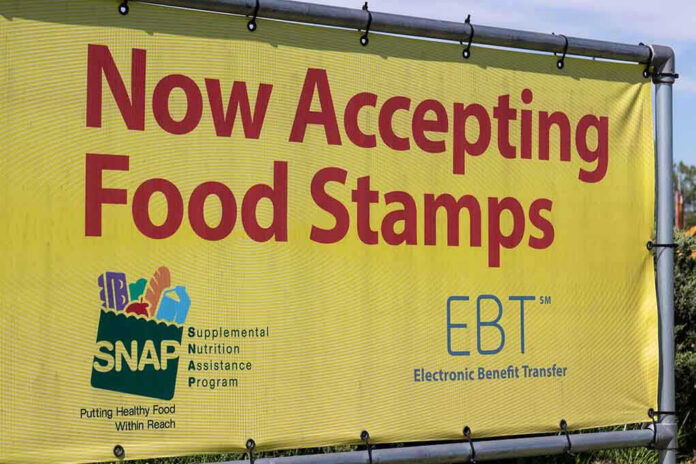
The U.S. Department of Agriculture announced that Supplemental Nutrition Assistance Program (SNAP) benefits will be suspended nationwide for November 2025, impacting more than 42 million low-income Americans. This unprecedented move comes after Congress failed to pass a budget, depleting federal funds dedicated to the program. State agencies like the South Carolina Department of Social Services have received direct orders to hold issuance files, making it clear that no new funds will flow until Congress acts. The consequences are immediate, with families, seniors, and disabled Americans left without expected support.
The suspension of SNAP, long known as food stamps, has sent shockwaves through communities and state governments. Governors and local officials are warning that food banks and charities cannot replace the scale of federal assistance. In New Mexico alone, nearly half a million residents are affected, with the governor’s office highlighting the inadequacy of emergency measures. While some states attempt to provide stopgap relief, the sheer number of impacted households makes meaningful intervention nearly impossible, putting pressure on federal lawmakers to resolve the impasse.
Finger-Pointing in Washington: Senate Democrats Blamed
The USDA and several political figures have taken the rare step of publicly attributing the funding lapse to Senate Democrats, accusing them of blocking essential budget legislation. This open assignment of blame marks a sharp escalation in Washington’s ongoing budget battles. Republican leaders argue that Democratic refusal to pass spending bills has held SNAP recipients hostage to unrelated policy demands, while Democrats counter that Republicans are using the crisis to force through controversial spending cuts. This political standoff has left millions of vulnerable Americans caught in the crossfire, with no resolution in sight.
The SNAP crisis exposes deeper fractures in the federal government’s approach to social safety nets. Unlike programs with mandatory funding, SNAP relies on annual appropriations, making it especially vulnerable to political gridlock. Previous government shutdowns saw temporary threats to benefits, but this is the first time in recent memory that the program has been fully suspended for a month. Experts warn that this sets a dangerous precedent, eroding trust in federal support and putting the most at-risk populations—children, the elderly, and the disabled—directly in harm’s way.
States Scramble as Families Face Uncertainty
Across the country, state agencies are activating contingency plans to manage the fallout from the SNAP suspension. South Carolina’s Department of Social Services and New Mexico’s governor have issued urgent alerts, but admit that state-level resources cannot fill the gap left by federal inaction. Advocacy groups and food banks are bracing for surging demand but concede that they are unable to replace SNAP’s massive reach. Retailers and local economies also stand to suffer, as SNAP dollars play a key role in supporting grocery stores and agricultural producers, especially in low-income areas.
The political blame game continues to escalate, but the reality for American families is grim. With no clear path to a congressional resolution, millions now face heightened food insecurity, declining trust in government, and growing frustration with leaders who allow essential programs to become bargaining chips. The situation underscores the urgency for reforms that protect core safety nets from partisan brinkmanship and safeguard vulnerable Americans from the consequences of federal dysfunction.
Sources:
Governor Responds to USDA Suspension of SNAP Benefits
USDA SNAP OBBBA ABAWD Exemptions Implementation Memo
SNAP Payments Halted: USDA Confirms No Food Benefits During Government Shutdown