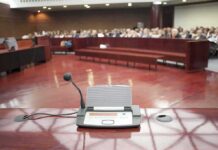


A federal judge apologized to the accused would-be assassin of President Trump and invoked January 6 comparisons, stirring fresh outrage over double standards in justice.
Story Snapshot
- U.S. Magistrate Judge Zia Faruqui apologized to suspect Cole Tomas Allen over D.C. Jail conditions.
- The judge cited “grave concerns,” likening Allen’s treatment to tougher-than-J6 confinement.
- Defense filings describe suicide watch, a safe cell, restraints, and repeated strip searches.
- Prosecutors offered limited pushback during the hearing, according to multiple outlets.
Judge’s On-Record Apology And Stated Concerns
U.S. Magistrate Judge Zia M. Faruqui opened and closed a May 4, 2026 hearing by apologizing to Cole Tomas Allen, the suspect charged in an alleged attempt to assassinate President Trump near the White House Correspondents’ Dinner. Court coverage reports the judge expressed “grave concerns” about Allen’s confinement in a “safe cell,” describing the placement as tantamount to solitary confinement. Multiple outlets documented the apology and the judge’s remarks from the bench, which centered on pretrial detention standards and due process obligations.
Reports indicate the judge contrasted Allen’s reported treatment with what January 6 defendants faced, stating he had not seen J6 detainees put in five-point restraints or confined in a safe cell. That comparison, delivered publicly, underscored concerns about consistency inside the D.C. Jail. The judge’s statements landed in a courtroom where prosecutors reportedly said little, while defense filings and complaints raised alarms about alleged excessive restrictions placed on the high-profile defendant pending trial.
Defense Descriptions Of Confinement Conditions
Defense filings described suicide watch measures that included placement in a padded safe cell, use of restraints, constant escorting, and repeated strip searches. Coverage further indicated Allen’s counsel argued the precautions were excessive and not supported by individualized risk assessments. Reports emphasized the defense position that these measures amounted to de facto solitary conditions, potentially impairing Allen’s ability to consult with counsel and prepare a defense, a Sixth Amendment concern that often drives judicial scrutiny in federal detention disputes.
Outlets reported that the judge’s apology was tied specifically to those confinement details, not to the underlying charges. Allen faces federal counts related to an alleged assassination attempt against a sitting president, a designation widely treated as domestic terrorism in media descriptions of the case. The government’s filings and in-court posture were not extensively detailed in initial coverage, leaving gaps about the precise rationale and medical or security assessments that may have informed the jail’s suicide-watch decision and related protocols.
The J6 Comparison And Consistency In Pretrial Standards
Faruqui’s J6 comparison placed a spotlight on equal treatment for detainees accused of political violence. Public records and media coverage since 2021 show that defense challenges to suicide watch and solitary-like conditions recur in high-profile cases, with judges intervening at notable rates. Here, the judge’s remarks questioned why a terrorism suspect would face stricter measures than some J6 detainees, raising a fairness test: if standards are uneven, confidence in the system erodes, especially among Americans already skeptical of D.C. justice practices.
JUST IN: Magistrate Judge Zia M. Faruqui apologized to Trump assassination attempt suspect Cole Tomas Allen during a Monday hearing.
"I apologize for the prior week."
— The Western Journal (@WesternJournalX) May 4, 2026
For conservatives, the optics are stark: a court apology to a man accused of trying to kill the president appears upside-down when many believe January 6 defendants endured harsh treatment without sympathy. Yet the record shows the judge aimed at detention process, not absolution. The takeaway is twofold: due process must be applied even-handedly, and public safety requires measured, documented custody decisions. Both principles should guide policy, without political filters or bureaucratic overreach.
Sources:
[1] Judge apologizes to alleged would-be Trump assassin … – WHMI
[2] Judge apologizes to accused Correspondents’ Dinner gunman for …
[3] Judge lays out ‘grave concerns’ over treatment of WHCD shooting …
[4] Judge lays out ‘grave concerns’ over treatment of WHCD suspect …
[5] Attorney for Trump assassination suspect Cole Allen calls suicide …
[6] Magistrate judge says alleged WHCD attacker being mistreated by …