

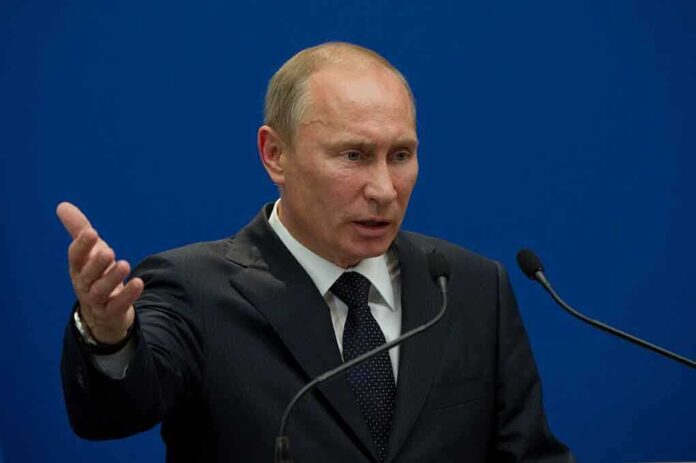
Putin’s abrupt termination of a key nuclear agreement with the US exposes growing threats to American national security while the world watches Washington’s new leadership respond.
Story Highlights
- Russian President Vladimir Putin signed a law ending the US-Russia plutonium disposal agreement, raising global nuclear tensions.
- The agreement’s collapse signals the eroding trust between the two largest nuclear powers, challenging Western diplomatic leverage.
- America’s new conservative leadership faces a critical test in defending national interests against increasing Russian aggression.
- Foreign policy failures under previous liberal administrations contributed to heightened risks now confronting the US.
Putin Ends Nuclear Cooperation: What Happened
On October 27, 2025, Russian President Vladimir Putin signed legislation formally terminating the US-Russia plutonium disposal agreement. This pact, originally designed to prevent both nations from rebuilding their nuclear arsenals, had already stalled in recent years due to mutual allegations of non-compliance and deteriorating relations. Putin’s move now makes official the breakdown of one of the last remaining arms control mechanisms between Moscow and Washington, raising immediate concerns about global nuclear security and the potential for renewed arms races.
Growing Threats to US Security and Conservative Values
This latest escalation comes as the United States faces mounting threats to its sovereignty and national security. For years, conservative Americans watched in frustration as leftist policies weakened America’s position on the world stage, emboldening adversaries like Russia and China. The collapse of the plutonium disposal agreement highlights the dangers of previous administrations’ approach to globalism and appeasement, which critics argue failed to protect American interests. With President Trump now in office, many conservatives expect a more assertive response that prioritizes national defense, constitutional values, and a clear rejection of foreign intimidation.
Strategic Consequences and Diplomatic Fallout
The end of the plutonium pact not only increases the risk of nuclear proliferation but also undermines existing frameworks for arms control and nonproliferation. The agreement was a cornerstone of post-Cold War efforts to reduce nuclear stockpiles and build trust between the US and Russia. Its termination signals the unraveling of decades of diplomacy, leaving the US and its allies with fewer tools to manage the threat of Russian nuclear expansion. Conservative analysts warn that this erosion of established agreements may embolden other adversarial regimes and further destabilize international security, making it imperative for US leadership to take a strong, principled stand.
America’s New Leadership: Restoring Strength and Accountability
President Trump’s administration inherits a landscape shaped by years of weak foreign policy and dangerous concessions. Conservative voices argue that restoring American strength requires holding adversaries accountable and defending core values such as individual liberty, limited government, and the constitutional right to self-defense. The termination of the plutonium disposal agreement offers a stark reminder of what’s at stake when diplomatic leverage is lost, and why the US must pursue policies that protect both its security and its founding principles against threats—whether from abroad or from failed domestic agendas.