

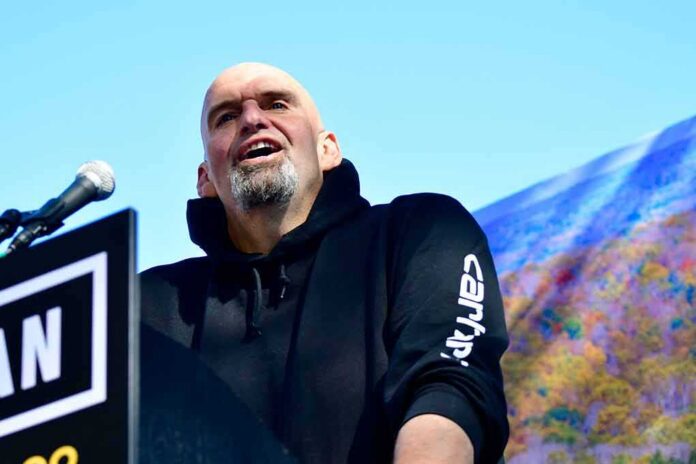
California gubernatorial candidate Steve Hilton set a hard deadline to clear every homeless encampment by December 31, 2027, tying removals to new recovery centers that promise beds, treatment, and a path to housing.
Story Highlights
- Hilton pledged to clear all encampments statewide by end of 2027, with local milestones by Labor Day.
- The plan links enforcement to Homeless Recovery Centers offering care, treatment, and job training.
- Sunbreak Ranch in San Diego County serves as the prototype facility for the model.
- Cost, capacity, and “suitable facility” standards were not detailed in public materials.
What Hilton Announced and When
On October 17, 2026, at Sunbreak Ranch in San Diego County, Steve Hilton vowed to clear every homeless encampment in California by the end of 2027. He set Labor Day 2027 as the local action target and December 31, 2027, as the statewide deadline. He said sidewalks and parks would be returned to public use once placements were available. He first signaled the pledge in July, writing that the cleanup would be finished by the end of 2027.
The campaign’s plan, titled “Off the Streets and Back on Track,” pairs encampment clearance with a services model. The plan promises beds, meals, showers, basic medical care, psychiatric care, addiction treatment, job training, and help moving into stable housing. Hilton said people need to get off the streets, away from drugs, and into mental health care and job training to rebuild their lives. He framed the approach as restoring order with care, not enforcement alone.
How the Plan Would Roll Out
Hilton said he would meet with mayors and county leaders in his first month in office. He would set public deadlines and begin enforcing camping bans once appropriate placements exist. He promised to use state help if local governments do not act. The Sunbreak Ranch site, highlighted during the announcement, is the prototype for the statewide network of Homeless Recovery Centers that would handle placement and services.
Hilton’s policy page also proposes redirecting tens of millions of dollars from harm-reduction programs over several years. That change would shift funding toward treatment and recovery services, which he argues are more likely to reduce street drug use and crime. The funding shift could reshape local service networks that now rely on those dollars, creating a sharp policy fight if he wins.
What Is Clear—and What Is Not
Reporting on the announcement noted what the plan shares and what it lacks. The promise is specific, public, and time-bound. The model includes services, not only removal. The prototype is identified. The rollout sequence is outlined. But the plan did not disclose total costs, the number of facilities, bed counts, staffing levels, or a construction timeline needed to meet the 2027 deadline. Those capacity details remain unspecified in public materials.
Steve Hilton wants to criminalize homelessness. I'm guessing either he &/ or his donors have money invested in private prisons.
Just say no to MAGA Steve Hilton.California governor candidate vows to clear every homeless encampment by end of 2027 | KTLA https://t.co/3qYxZFpZwF
— psychedelicatessen (@MentalRiot) October 18, 2026
The legal and policy context has shifted since 2024. The Supreme Court’s decision in City of Grants Pass v. Johnson allows governments to enforce general camping bans more readily. That change opens space for state and local action if placements exist. At the same time, research finds that permanent housing tends to deliver better long-term results than displacement, and outcomes depend on whether people receive real placements with services after a clearing.
Why This Matters for Californians
Californians across the spectrum are frustrated with encampments, public drug use, and unsafe streets. Families want parks open. Small businesses want sidewalks clear. People on the streets need care that sticks. Hilton’s pledge speaks to that shared demand for action. It also raises the tough part: building enough real placements, with treatment and housing paths, by a fixed date. That will test the state’s ability to plan, build, hire, and coordinate at speed.
The stakes extend beyond one campaign. Voters want public spaces safe and clean, and they want government to deliver results instead of excuses. Meeting Hilton’s deadline would require transparent goals, public dashboards, and firm standards for “suitable” placements. It would also require clear rules for people who decline services and for how property and due process are handled. Those choices will shape whether clearing a camp leads to lasting recovery and housing—or a fast return to the street.
Sources:
nypost.com, cbs8.com, ktla.com, hannity.com, uscannenbergmedia.com, lifezette.com, jamanetwork.com, pmc.ncbi.nlm.nih.gov
© boldfrontnews.com 2026. All rights reserved.