

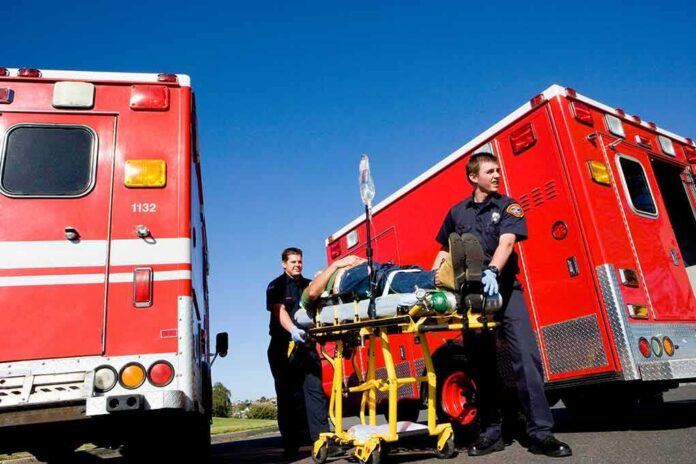
A school hike turned deadly when a suspected leftover Hezbollah cluster munition exploded near Israel’s Lebanon border, killing a teenager and injuring many classmates and teachers.
Story Snapshot
- Police and medics reported one teen killed and about 19–24 injured during a school hike.
- Israel Defense Forces said the blast likely came from a Hezbollah cluster submunition.
- Officials said the hiking route was approved and open to the public.
- Investigators are working to confirm how the device detonated and the exact casualty count.
What Happened on the School Outing
Israeli students and staff from a religious high school were hiking near the Lebanon border when an explosion tore through the group. Police said early findings pointed to unexploded ordnance as the cause. Medics reported one teenage fatality and roughly 19 to 24 injuries, including serious cases. Reports identified the group as students and teachers from ORT Yeshiva High School. The tragedy struck during a supervised outing in northern Israel’s Ramim Ridge area.
The Israel Defense Forces said a preliminary review suggested a cluster submunition likely tied to Hezbollah caused the blast. That assessment aligned with several outlets that described the device as a leftover submunition from a past rocket attack. Police continued to examine the scene to determine the exact type of ordnance. Officials cautioned that the findings were initial, pending a full forensic analysis of fragments and the blast site.
Route Approval and Safety Questions
Local authorities and Israel’s Education Ministry said the hiking route had been approved and open for public passage. Reporting indicated the area was permitted for travel at the time of the trip. The approvals raised hard questions about how a dangerous device remained along a path used by students and staff. Agencies did not release clearance records or specify which office held responsibility for unexploded ordnance surveys on that trail.
Investigators had not established how the detonation occurred. Witness accounts and early reports left open whether someone stepped on, handled, or moved the object before it exploded. Police and military teams gathered statements and examined personal items to map the sequence. Casualty figures varied in initial reports, listing 19, about 20, or 24 injured, and the deceased student as 14 or 15, which often occurs in fast-moving emergencies.
Why This Hazard Persists Along the Border
Unexploded cluster munitions are a known danger in areas touched by conflict. These bomblets can fail to detonate on impact and remain deadly for years. Humanitarian reporting after the 2006 Lebanon war recorded dozens of deaths and more than one hundred injuries from such devices, most tied to cluster submunitions. The wide spread of these small munitions makes full clearance slow and complex, even when teams work methodically across suspected zones.
🟦 EVENING RECAP:
October 12, 2026⭕️ BREAKING
• IDF launches investigation after deadly Hezbollah munition explosion: A 14-year-old Israeli boy was killed and 24 students and teachers injured during a school hike near Lebanon. IDF Chief of Staff Eyal Zamir ordered an… pic.twitter.com/unO7OHAIoe
— DEFENDERS OF ISRAEL (@Israeli_Sniper) October 12, 2026
Israel and Lebanon’s border region has faced new strikes and continued tension in recent years. That fighting can seed fresh unexploded hazards while older devices still linger. Israeli military sources have also warned that thousands of unexploded munitions may remain in northern Israel, many from Hezbollah attacks. This mix of old and recent contamination increases risk for hikers, farmers, and first responders who rely on maps, signs, and route approvals to stay safe.
What Authorities Are Doing Next
Police and the Israel Defense Forces launched a joint investigation to confirm the device type and origin. Teams planned to review blast fragments, interview students and staff, and check any available trail-clearance records. Officials said they would update casualty counts as hospitals completed treatment and discharge records. The Education Ministry and local leaders faced calls to reassess hiking approvals and to expand inspections along public routes in northern Israel.
Why This Matters for Families and Communities
Parents trust that school trips use safe routes and that the state checks public trails for hidden dangers. When a permitted path still holds a lethal device, people across the political spectrum see a failure of basic duty. Citizens want clear answers about who surveys these areas, how often they are checked, and how quickly new hazards are marked and cleared. Transparent findings and faster cleanup help restore confidence and protect children, teachers, and local communities.
Sources:
zerohedge.com, israel.com, aljazeera.com, aa.com.tr, ynetnews.com, newscord.org, timesofisrael.com, themedialine.org
© boldfrontnews.com 2026. All rights reserved.