
President Trump’s Montana rally doubled as a hard push for Republican candidates and a fresh fight over press access.
Story Highlights
- Trump rallied in Kalispell to boost Aaron Flint and Kurt Alme, urging a Republican vote.
- The event stressed gun rights, echoing core Republican themes for Montana voters.
- Local reports showed a packed arena and strong turnout by Republican officials.
- A judge curbed White House media bans as access disputes shadowed the roadshow.
Trump Rallies in Montana to Boost Republican Ticket
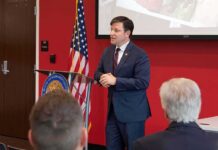
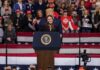
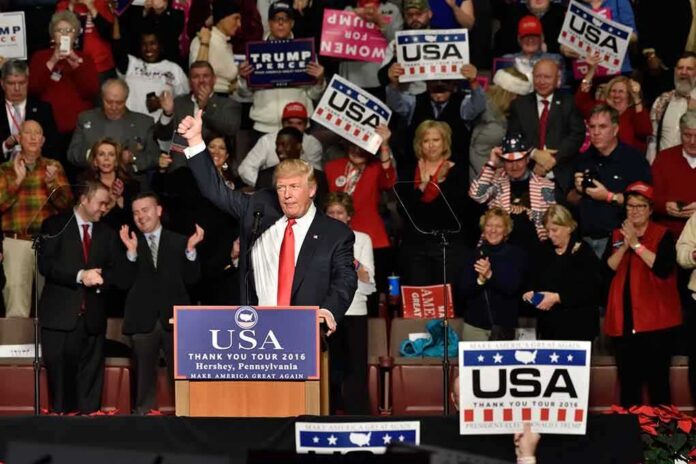
President Trump held a midterm campaign rally on October 14, 2026, at the Majestic Valley Arena in Kalispell, Montana. Trump urged voters to back Republican House candidate Aaron Flint and Senate candidate Kurt Alme. He also criticized Flint’s Democratic opponent, Sam Forstag, and told attendees to “get out and vote.” The Associated Press identified the stop as part of a Western swing aimed at helping Republicans in Montana’s First District and a statewide Senate race.
Local coverage reported a full arena and a large crowd from the Flathead Valley. Republican officials and figures were in the mix, signaling party unity around the ticket. Reports highlighted attendance by Senator Steve Daines and other Montana Republicans over the week’s events, underscoring that this was a coordinated push rather than a solo presidential appearance. The show of strength matched the campaign’s message that turnout and energy will decide close races in November.
Issue Messaging Focuses on Gun Rights and Party Control
Trump leaned on Montana’s gun culture to rally support. He told voters that a Republican vote would protect the Second Amendment. He said, “If you vote Republican, your cherished Second Amendment shall not be infringed on in any way, shape or form.” The focus matched a familiar playbook for conservative areas. It aimed to fire up reliable voters on a clear issue where party lines are stark and passions run high in the Mountain West.
The Montana stop fit into a larger midterm push across multiple Western states. Public broadcasting described the trip as a midterm roadshow designed to rally Republicans and prevent expected losses that often hit the president’s party. That broader frame mirrors decades of history when the president’s party tends to lose seats in midterm elections. The roadshow signaled that party leaders see in-person events as a needed jolt for base turnout this fall.
Roadshow Strategy, Historical Headwinds, and Measured Claims
The White House called the broader effort a “midterm blitz,” with several states on the schedule. Public materials pointed to many planned stops, though only select events have detailed public records so far. The campaign’s claim is simple: rallies help fire up supporters, recruit volunteers, and shape local news cycles. The available reporting confirms the events and the message, but it does not prove a change in vote share or turnout by itself.
Historical patterns explain the urgency. Since World War II, the president’s party has usually lost House seats in midterms. Analysts often warn that even strong economies or favorable maps may not erase that built-in drag. Campaigns therefore rely on rallies to lift enthusiasm and to keep committed voters from staying home. That is the backdrop for this push in a Republican-leaning part of Montana, where base energy can still be decisive in down-ballot races.
Press Access Fight Shadows the Events
A federal judge recently blocked parts of the White House’s media bans, ordering the administration to stop excluding certain outlets from the complex. The ruling did not guarantee access to every venue, but it narrowed the administration’s limits. The dispute continued as reporters tracked Trump’s travel and campaign stops. That legal fight risked shifting coverage from local candidates to a clash over press rights during the heart of the midterm drive.
NewsNation's Vinay Simlot has the latest on President Trump's campaign tour…: “President Donald Trump is on a western swing, moving to Arizona and Montana today. In Texas, a state that last elected a Democrat to the Senate in 1988, Vice President JD Vance campaigned for Ken… pic.twitter.com/KwYHdQQd6o
— Worldwide News Network (@WorldwideNNX) October 14, 2026
Coverage also noted that the White House omitted Cable News Network from an earlier press pool and limited some access to Air Force One. Those steps fed claims that media rules are uneven and favor insiders. For readers across the aisle who worry about elite power and closed doors, this fight hits a nerve. It suggests that who controls the microphone can shape what voters hear during a tight election season.
What This Means for Voters
For Montana voters, the rally laid out clear stakes: gun policy, control of Congress, and which slate will fight for their priorities. For Republicans, the night showed organization and energy behind local candidates. For Democrats, it signaled where the president sees risk and opportunity. The bigger test comes later: whether the roadshow moves turnout beyond the party base. For now, the facts are plain—Trump showed up, the arena filled, and the party message landed loudly.
Sources:
youtube.com, apnews.com, nbcnews.com, pbs.org, flatheadbeacon.com, presidency.ucsb.edu
© boldfrontnews.com 2026. All rights reserved.