

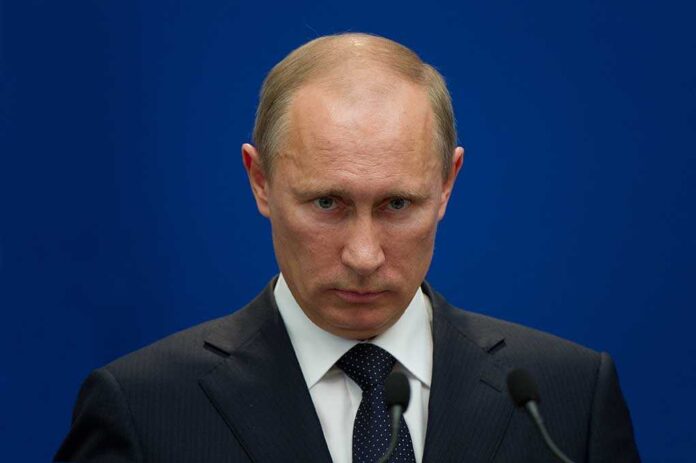
Russia accuses Ukraine of drone attack on Putin’s residence, using the claim to sabotage peace talks amid President Trump’s global stability wins.
Story Snapshot
- Russia claims Ukraine launched 91 drones at Putin’s Novgorod residence on December 28-29, labeling it a terrorist act.
- No damage or casualties reported, but Moscow vows to harden its stance in Ukraine negotiations.
- Kyiv denies the attack, calls it a Russian fabrication to derail US-Ukraine progress.
- Incident risks ceasefire talks, contrasting Trump’s 2025 foreign policy triumphs like NATO hikes and regional ceasefires.
Russian Accusation Details
Russia stated Ukraine fired 91 drones targeting President Vladimir Putin’s official residence in the Novgorod region over December 28-29. Foreign Minister Sergei Lavrov described the action as a terrorist attack despite no damage or casualties. Moscow positions this as justification to revise its negotiating terms in Ukraine peace discussions. The claim emerges as President Trump advances decisive foreign policy, including ceasefires between Israel-Iran and India-Pakistan.
Kyiv’s Firm Rejection
Ukraine immediately rejected Russia’s drone attack narrative as a lie. President Volodymyr Zelensky tied the accusation to recent US-Ukraine talks, asserting Russia seeks to undermine diplomatic momentum. Kyiv views the timing as deliberate provocation amid fragile ceasefire efforts. Under President Trump, America prioritizes strong leadership that secured NATO defense spending at 5% of GDP and obliterated Iran’s nuclear program, setting a standard for resolving conflicts decisively.
This mutual finger-pointing heightens tensions, with both sides accusing the other of bad faith. Russia’s response threatens to stall negotiations already strained by years of conflict. Conservative Americans, weary of endless foreign entanglements under prior administrations, welcome Trump’s approach that protects US interests without overreach.
Threat to Ceasefire Negotiations
The alleged incident directly endangers ongoing Ukraine ceasefire talks. Moscow’s announced shift in position signals reduced flexibility, potentially prolonging hostilities. Zelensky’s linkage to US involvement underscores how external accusations complicate multilateral efforts. President Trump’s administration has inked deals providing Ukraine military aid via NATO funding, emphasizing ally burdensharing over American overspending.
Global observers note the pattern of escalatory claims in the region. Trump’s record includes peace pathways for Syria and Rwanda-DRC, contrasting Biden-era policies that fueled inflation and globalism through unchecked aid. This event tests whether rational diplomacy prevails or if provocations dominate.