
Congressional leaders from both parties moved to probe Nvidia after President Trump helped reinstate Jensen Huang as chief executive officer, raising fresh questions about national security and corporate power.
Story Highlights
- Nvidia’s board brought Jensen Huang back as chief executive officer after receiving senior U.S. government input that said there was no national security risk.
- President Trump said his administration assured Nvidia’s board there was no evidence of unlawful conduct by Huang and no national security threat.
- Senator Tom Cotton and other lawmakers announced investigations into Nvidia, citing export-control and governance concerns.
- U.S. officials detailed a separate probe into Megaspeed and possible diversion of Nvidia chips through cloud routes that can bypass traditional export rules.
Nvidia Reinstates Huang After Government Assurances
Nvidia’s board unanimously reinstated Jensen Huang as president, chief executive officer, and director. The company said it consulted with senior levels of the United States government and concluded Huang’s return posed no national security risk. President Trump publicly backed the move and said the administration had “no reason to believe” Huang’s return created a threat, and that the attorney general confirmed the government did not have evidence of unlawful conduct. The decision reversed an earlier board stance and immediately reset leadership at a pivotal chip maker.
Trump also said the administration provided assurances to Nvidia’s board about security concerns tied to Huang’s return. The White House message aligned with Nvidia’s statement, which emphasized government input in the process. Supporters framed the outcome as stabilizing for an essential company at the center of artificial intelligence hardware. Critics argued that even if legal exposure is unclear, the appearance of presidential pressure on a private board raises governance red flags that could echo across corporate America.
Congress Launches National Security and Governance Inquiries
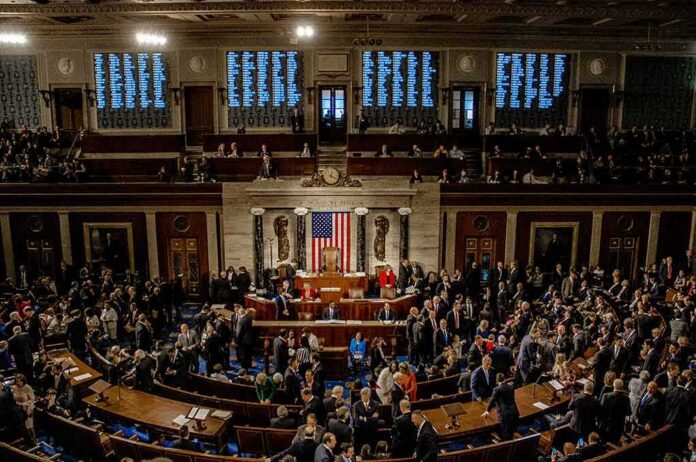
Senator Tom Cotton said Congress has “much to investigate,” pointing to security and oversight issues after the reinstatement. Lawmakers from both parties signaled hearings were moving forward, reflecting a rare alignment across the aisle. The scrutiny lands as Nvidia also faces separate attention from regulators over accounting matters, which adds to investor and public pressure on its board to show airtight controls and clear reporting lines during a sensitive period for the chip giant.
Democratic lawmakers opened a probe into Nvidia’s influence over a United States Commerce Department inquiry into Megaspeed, a Singapore-based cloud company and Nvidia partner, testing whether corporate lobbying swayed government actions. The Department of Commerce and the Department of Justice recently said the Megaspeed investigation began in 2024, after proactive monitoring flagged risks that sensitive chips might be diverted despite controls. These efforts underline how lawmakers see export enforcement and corporate governance as linked in the artificial intelligence supply chain.
Export Controls Shift From Boxes To Cloud Access
Policy analysts describe a major shift in United States export controls from tracking chip shipments to tracking who can access powerful computing through the cloud. Officials have warned that companies can route access to advanced chips through third countries, which can weaken traditional safeguards at the border. This is the terrain where Megaspeed and similar cases matter. If cloud access can bypass rules, then corporate and government watchdogs must adapt, or sensitive computing power could still reach restricted users.
Nvidia Reinstates Jensen Huang as CEO at Trump's Urging; Shares Surge Over 30%, Nasdaq Up 7%, While Lawmakers Slam "Reckless" Move
Core Theme
Nvidia's abrupt reversal on Jensen Huang, driven by Trump's public pressure and followed by a massive market rebound that recovered more… pic.twitter.com/R4czIonjUx— The Cloaked Gaze 👀 (@gaze_observer) November 24, 2026
This moment feeds a broader public worry about elites and special access. Conservatives see risks tied to China and national security. Liberals see concentrated corporate power and weak oversight. Both sides see a system that bends for the well-connected while rules lag behind real-world workarounds. Congress now has a concrete test: force clear answers on export compliance, define guardrails for board conduct when presidents weigh in, and set penalties that deter games with the rules rather than reward them.
Sources:
mediaite.com, kxan.com, bbc.co.uk, reuters.com, sunherald.com, nbcnews.com, washingtonpost.com, csis.org, iaps.ai
© boldfrontnews.com 2026. All rights reserved.