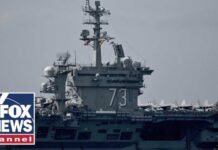

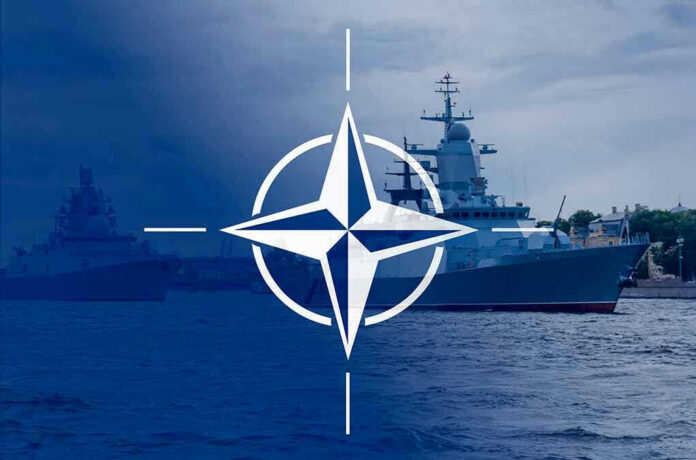
President Donald Trump said the United States would block ships in the Strait of Hormuz again, and his military later said the blockade was active. The move reopened a fight over who really controls one of the world’s most important shipping lanes.
Quick Take
- Trump said the United States would begin “blocking” ships entering or leaving the Strait of Hormuz after talks failed.
- The United States military then said the blockade was in effect and applied to ships tied to Iranian ports.
- Earlier reporting said a deal had briefly reopened the strait before the latest escalation.
- The dispute matters because even a limited closure can shake oil flows and global shipping.
Trump Revives the Blockade Message
President Trump posted on Truth Social that the United States would begin “BLOCKADING any and all Ships trying to enter, or leave, the Strait of Hormuz” after weekend talks with Iran failed. CBS News reported that the U.S. naval blockade of Iranian ports in the Strait of Hormuz took effect at 10 a.m. Eastern time. The announcement matched the blunt style Trump has used before on Iran and the strait.
The public message was not just political theater. The military side moved with it. The War Department said U.S. forces had set up a maritime blockade against ships passing through the Strait of Hormuz that had done business with Iranian ports, or were headed there. That wording matters because it points to a blockade aimed at Iranian trade, not a blanket closure of every ship in the waterway.
What the Military Says the Blockade Covers
Earlier reporting from NBC News said the United States Central Command clarified that the blockade would only hit maritime traffic going to and from Iranian ports, while it would not block freedom of navigation for other vessels passing through the strait. That distinction has been central to the public confusion. Trump’s statements sounded wider than the military’s operational rules, which is why the legal and practical scope became such a major issue.
The report from CBS News also said the blockade followed failed weekend talks and a direct Trump order. Other coverage described the same pattern in April, when Trump first announced a blockade and the military later narrowed the enforcement language to Iranian ports and coastal areas. In plain terms, the government’s public line has often sounded broader than the actual military instructions on the water.
Why the Strait Matters So Much
The Strait of Hormuz is one of the most sensitive shipping lanes in the world. BBC reporting said the strait remained a vital route off Iran’s coast, and that the dispute had led to repeated claims that it had been closed or reopened. When traffic through that passage slows, energy prices, shipping costs, and insurance rates can all move fast. That is why every new blockade claim draws immediate attention.
🚨 BREAKING: U.S. REIMPOSES FULL NAVAL BLOCKADE ON IRANIAN PORTS
🔥 The talking is over. The blockade is being enforced.
The Joint Maritime Information Center has issued a new advisory warning commercial shipping that the United States will begin enforcing a naval blockade of… https://t.co/m4Ci38G3JP pic.twitter.com/6xiLu0yy3P
— Gunnys Adventures (@DerrickSalas9) July 13, 2026
The recent back-and-forth also shows how quickly a military message can collide with politics. NPR reported in June that the United States lifted its blockade after a memorandum of understanding with Iran, and NBC later reported the end of that blockade as well. But the latest reporting shows the dispute is still alive, with Trump again saying the blockade is back and military officials again describing it as active.
What This Means Going Forward
The wider picture is a familiar one for both supporters and critics of Washington. Trump presents the blockade as proof of pressure and control. Critics see another example of U.S. power being used in a way that can outpace clear public explanation. Both views reflect a deeper frustration with a federal system that often speaks in bold headlines, then leaves the public to sort out the fine print after the fact.
For now, the key fact is simple. Trump says the blockade is back, and the military says it is enforcing it. Whether that remains a narrow blockade on Iranian ports or grows into something wider will depend on what U.S. forces do next, how Iran responds, and whether the latest round of talks produces another break in the cycle.
Sources:
redstate.com, cbsnews.com, war.gov, wsj.com, studies.aljazeera.net, youtube.com, thehill.com
© boldfrontnews.com 2026. All rights reserved.